“Indigenous peoples have the right to maintain, control, protect and develop their cultural heritage, traditional knowledge and traditional cultural expressions, as well as manifestations of their sciences, technologies and cultures, including human and genetic resources, seeds, medicines, knowledge of the properties of fauna and flora, oral traditions, literatures, designs, sports and traditional games and visual and performing arts. They also have the right to maintain, control, protect and develop their intellectual property over such cultural heritage, traditional knowledge, and traditional cultural expressions.”
Alexander College acknowledges that the land on which we usually gather is the traditional, ancestral and unceded territory of the Coast Salish peoples, including the territories of the xʷməθkwəy̓əm (Musqueam), Skwxwú7mesh (Squamish), and Səl̓ílwətaʔ/Selilwitulh (Tsleil-Waututh) Nations. We are grateful to have the opportunity to live and work in this territory.
Indigenous Studies encompasses research and learning that includes the “languages, histories, geographies, and contemporary experiences of Indigenous peoples. It may (or may not) intersect with critical approaches, such as decolonization and colonial studies” (Xwi7xwa, 2025).
Katzie (KATE-zee) · Kwantlen (KWANT-len) · Kwikwetlem (kweh-KWET-lem) · Musqueam (muss-KWEE-um) · Qayqayt (keh-KITE) · Semiahmoo (se-mi-AH-moo) · Squamish (SQUA-mish) · Sto:lo (STAW-low) · Tsawwassen (tsah-WASS-en) · Tsleil-Waututh (SLAY-wha-tuth)
-(Territorial Acknowledgements, n.d.)
Learn more about the Nations on which you conduct your studies at AC by exploring their websites:
Musqueam Nation (xʷməθkwəy̓əm)
Squamish Nation (Skwxwú7mesh)
Tsleil-Waututh Nation (Səl̓ílwətaʔ/Selilwitulh)
List of all Indigenous nations in Canada
List of all Indigenous Tribal Councils in Canada
When looking for resources related to Indigenous Studies, try some of these keywords in your searching :
e.g., Residential Schools AND Reconciliation
* Interested in learning more about using keywords for research? Check out our videos on how to create and search using keywords on our Research Skills page.
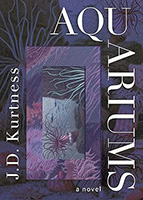
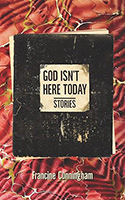
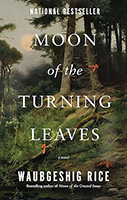
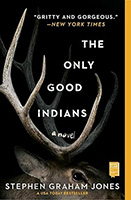
These e-Books are available in the online library collection. Click the title to access the resource.
Open access resources are resources that are available to everyone for free online. Links here will lead to sites where you can download textbooks or access journals related to Indigenous Studies.
Canadian History: Pre-Confederation by John Douglas Belshaw
An open access textbook that surveys Canadian History until 1867, including a chapter on Aboriginal Canada before Contact.
This text reviews Indigenous science topics including the historical foundations and Indigenous scientific curriculum.
Book 2 covers a metaphorical study and culturally appropriate projects based on curriulumm level (e.g. high school).
Shingwauk Narratives: Sharing Residential School History by Jenna Lemay
Shingwauk Narratives consist of a series of letters from Rev. Edward F. Wilson and Rev. George Ley King, first and four principals of the Shingwauk Indian Residential School. The letters provide details about daily life at the school, and are an important resource to understand the social and political context in which residential schools operated.
Crown-Indigenous Relations and Northern Affairs Canada (CIRNAC)
Website for the department of the Government of Canada responsible for policies relating to Indigenous peoples.
National Centre for Truth and Reconciliation
Created by groups affected by residential schools in Canada, this site is the permanent home for statements, documents and other materials to share history and move forward.
A digital map of Indigenous territories all over the world.
First Peoples: A Guide for Newcomers
This guide, created by the City of Vancouver, is a short introduction to Indigenous communities in Vancouver and Canada. It was created specifically for individuals who are new to Vancouver.
Surrey First Peoples Guide for Newcomers
This is a 32-page guide launched by Surrey Local Immigration Partnership (Surrey LIP); it serves to provide information on the traditional protocols, histories, and current realities of Indigenous, Metis, and Inuit people in Canada. It was created specifically for individuals who are part of newcomer communities in Surrey.
Collection of historic and modern treaties by the Canadian government.
A searchable database of first nations, tribal councils, and reserves.
A website created by First Nations and Indigenous Studies at UBC to assist students, instructors, and the public on aboriginal topics (identity, land, government policy, culture, and more) in Canada.
Xwi7xwa Library Research Guides
A list of detailed Research Guides compiled by UBC’s Xwi7xwa Library. Xwi7xwa Library is UBC’s centre for academic and community Indigenous scholarship.
This is a free 12-lesson Massive Open Online Course (MOOC) from the Faculty of Native Studies at the University of Alberta. The course explores Indigenous histories and contemporary issues in Canada from an Indigenous perspective.
I-Portal Indigenous Studies Portal
Website for the department of the Government of Canada responsible for policies relating to Indigenous peoples.
CCI guide for research involving Indigenous Peoples and communities.
Land acknowledgements (also referred to as territorial acknowledgement) are “respectful, yet political, statement[s] that acknowledg[e] the colonial context of the Indigenous territory / territories where a gathering is taking place. It recognizes relationships between land and people, and in particular Indigenous peoples’ continued presence on the lands being acknowledged.” (Xwi7xwa, 2024).
See this guide from the University of British Columbia’s Xwi7xwa Library, which further details the importance of constructing meaningful land acknowledgements. Land acknowledgements should be “stated from the heart, be personal, and some recommend including an action towards reconciliation. Taking this approach keeps acknowledgements from being a token gesture, or being a checklist item” (Simon Fraser University, 2023).
Alexander College invites you to learn more about the land you are situated on through using this free interactive map by Native Land.
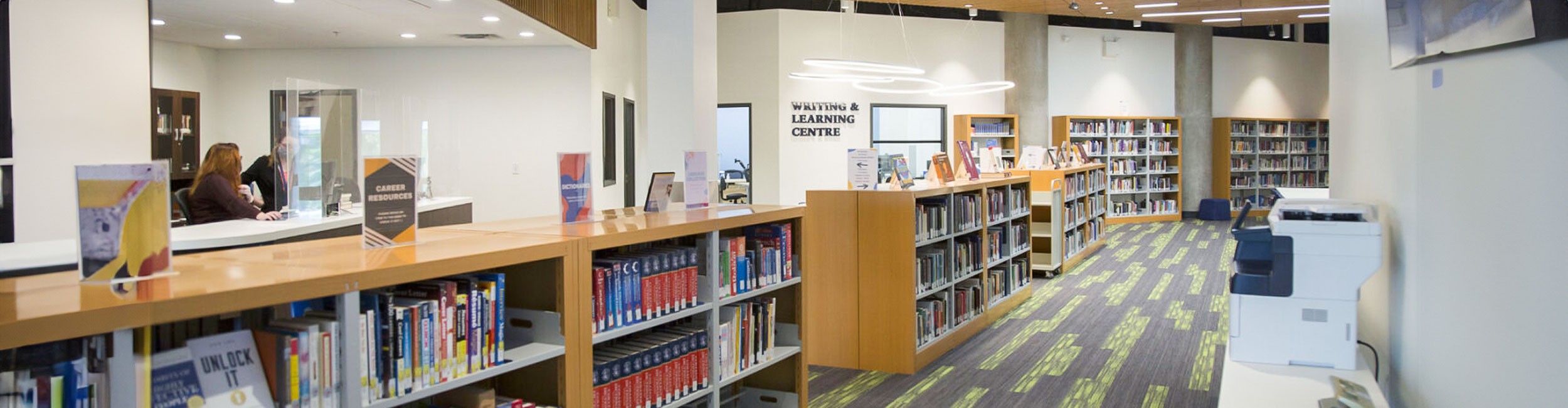
Online WLC guides can be found here. You can also book an appointment with the Writing and Learning Centre for workshops and one-on-one learning help.
Need help? Connect with a Librarian through AskAway!
AskAway ChatSimon Fraser University. (2023, September 6). Traditional territories: SFU’s land acknowledgements | SFU Library. https://www.lib.sfu.ca/help/academic-integrity/indigenous-initiatives/traditional-territory
Territorial Acknowledgements. (n.d.). Retrieved February 12, 2025, from https://www.sfu.ca/siat/programs/undergraduate/current-students/student-resources/territorial-acknowledgements.html
Xwi7xwa, L. (2024, November 25). Research Guides: Xwi7xwa – Distance Research: Doing Land Acknowledgements. https://guides.library.ubc.ca/distance-research-xwi7xwa/landacknowledgements
Xwi7xwa, L. (2025, February 7). Research Guides: First Nations and Indigenous Studies: Getting Started. https://guides.library.ubc.ca/indigenousstudies/home
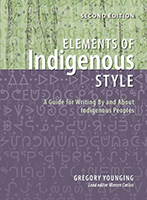
Younging, G. (2025). Elements of Indigenous Style (Second). Brush Education Inc.
Page Revised March 5, 2025 by Rebecca Ardron
Alexander College acknowledges that the land on which we usually gather is the traditional, ancestral and unceded territory of the Coast Salish peoples, including the territories of the xʷməθkwəy̓əm (Musqueam), Skwxwú7mesh (Squamish), and Səl̓ílwətaʔ/Selilwitulh (Tsleil-Waututh) Nations. We are grateful to have the opportunity to work in this territory.
Alexander College acknowledges that the land on which we usually gather is the traditional, ancestral and unceded territory of the Coast Salish peoples, including the territories of the xʷməθkwəy̓əm (Musqueam), Skwxwú7mesh (Squamish), and Səl̓ílwətaʔ/Selilwitulh (Tsleil-Waututh) Nations. We are grateful to have the opportunity to work in this territory.

+1 604-435-5815
#100 - 570 Dunsmuir St.,
Vancouver, BC
V6B 1Y1 Canada