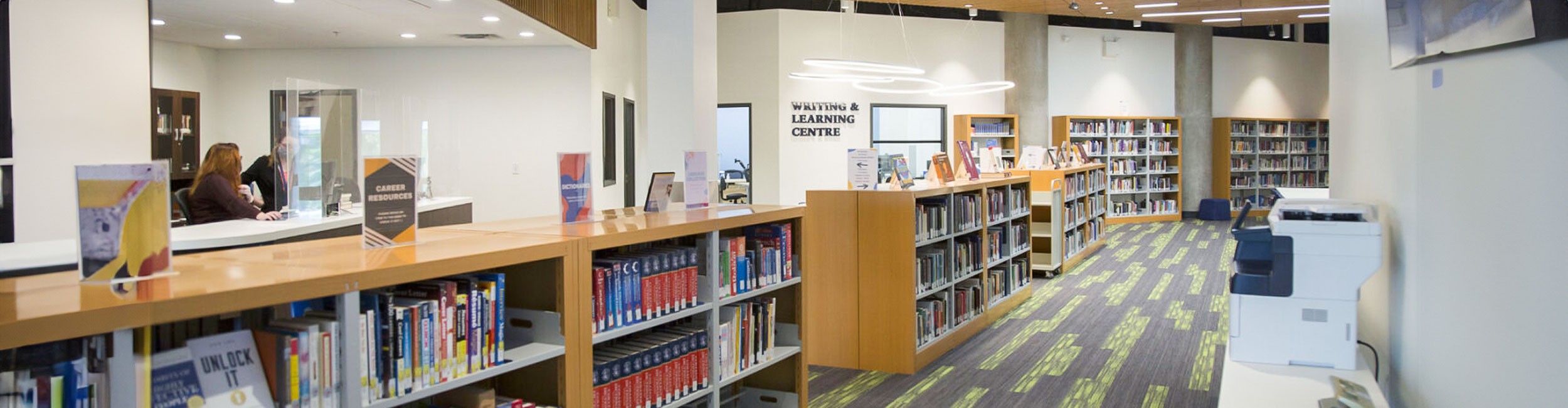
| Title | Author | Call# | Book Cover |
|---|---|---|---|
| Precalculus | Safier, Fred | QA 157 .S215 2020 |  |
| Algebra and Trigonometry: Graphs and Models | Bittinger, Marvin L. | QA 152.3 .A49 2013 |  |
| Applied Calculus for Business, Economics, and the Social and Life Sciences | Hoffmann, Laurence D. | QA 303.2 H64 2012 |  |
| Linear Algebra and its Applications | Lay, David C. | QA 184.2 .L39 2016 |  |
| Algebra: A Complete Introduction | Abbott, Paul | QA 152 .A23 2018 |  |
| Single Variable Calculus: Early Transcendentals | Stewart, James | QA 303.2 .S749 2012 |  |
| Single Variable Calculus: Concepts and Contexts | Stewart, James | QA 303.2 .S73 2016 |  |
| Multivariable Calculus | Stewart, James | QA 303.2 .S735 2012 |  |
* Want to reserve one of these titles? Email library@alexandercollege.ca with your student # and the book title.
These e-Books are available in the online library collection. Click the title to access the resource.
Introductory Calculus I: Understanding the Integral
Geveci, Tunc 2015
Introductory Calculus I: Understanding the Derivative
Geveci, Tunc 2015
These handbooks provide easy to digest information about topics covered within Math.
The Math Book (2019) by Heather Davis
The Math Book explores and explains subjects ranging from ancient mathematical ideas and inventions, such as prehistoric tally bones and Sumerian multiplication tables, through the developments in mathematics during medieval and Renaissance Europe, to the more recent rise of game and group theory. It can be found in the library under call number QA 93 .D36 2019 .
A Mind for Numbers: How to Excel at Math and Science (2014) by Barbara Oakley
Whether you are a student struggling to fulfill a math or science requirement, or you are embarking on a career change that requires a new skill set, A Mind for Numbers offers the tools you need to get a better grasp of that intimidating material. It can be found in library under call number QA 11.2 .O23 2014.
When looking for resources related to MATH, try some of these keywords in your searching:
Sample search: (Graph OR Graphing) AND Linear equations
* Interested in learning more about using keywords for research? Check out our videos on how to create and search using keywords on our Research Skills page.
Open access resources are resources that are available to everyone for free online. Links here will lead to sites where you can download textbooks or access journals related to Math.
Prealgebra is designed to meet scope and sequence requirements for a one-semester prealgebra course. The text introduces the fundamental concepts of algebra while addressing the needs of students with diverse backgrounds and learning styles.
Elementary Algebra by Lynn Marecek
Elementary Algebra is designed to meet the scope and sequence requirements of a one-semester elementary algebra course.
Algebra & Trigonometry by Jay Abramson
Algebra & Trigonometry provides a comprehensive exploration of algebraic principles and meets scope and sequence requirements for a typical introductory algebra and trigonometry course.
Organic Chemistry with a Biological Emphasis by Timothy Soderberg
A First Course in Linear Algebra is for science and engineering students who have an understanding of basic algebra.
A First Course in Linear Algebra by Ken Kuttler
Introduction to Inorganic Chemistry is a textbook focusing on the study of the synthesis, reactions, structures and properties of compounds of the elements.
Calculus: Volume 1 by Gilbert Strang
Calculus: Volume 1 guides students through the core concepts of calculus and helps them understand how those concepts apply to their lives and the world around them. Volume 1 covers functions, limits, derivatives, and integration.
Calculus: Volume 2 by Gilbert Strang
Calculus: Volume 2 guides students through the core concepts of calculus and helps them understand how those concepts apply to their lives and the world around them. Volume 2 covers integration, differential equations, sequences and series, and parametric equations and polar coordinates.
Calculus: Volume 3 by Gilbert Strang
Calculus: Volume 3 guides students through the core concepts of calculus and helps them understand how those concepts apply to their lives and the world around them. Volume 3 covers parametric equations and polar coordinates, vectors, functions of several variables, multiple integration, and second-order differential equations.
Elementary Differential Equations with Boundary Value Problems by William Trench
Elementary Differential Equations with Boundary Value Problems is written for students in science, engineering, and mathematics who have completed calculus through partial differentiation. This text also includes 2041 numbered exercises, many with several parts.
College Mathematics for Everyday Life by Maxie Inigo
College Mathematics for Everyday Life was written for a college-level liberal arts math class. It addresses math concepts that most people will encounter as part of their everyday life, including statistics, probability, growth, finance, graph theory, voting systems, fair division, apportionment, and geometric symmetry and the golden ratio. Each chapter includes a set of homework questions for practice.
A question and answer site for professional mathematicians.
MathWorld is a free service to the world’s mathematics and internet communities as part of a commitment to education and educational outreach.
Khan Academy provides introductory tutorials from basic arithmetic to calculus.
You can a book an appointment with the Writing and Learning Centre for workshops and one-on-one MATH help.
Need help? Connect with a Librarian through AskAway!
AskAway ChatAlexander College acknowledges that the land on which we usually gather is the traditional, ancestral and unceded territory of the Coast Salish peoples, including the territories of the xʷməθkwəy̓əm (Musqueam), Skwxwú7mesh (Squamish), and Səl̓ílwətaʔ/Selilwitulh (Tsleil-Waututh) Nations. We are grateful to have the opportunity to work in this territory.
Alexander College acknowledges that the land on which we usually gather is the traditional, ancestral and unceded territory of the Coast Salish peoples, including the territories of the xʷməθkwəy̓əm (Musqueam), Skwxwú7mesh (Squamish), and Səl̓ílwətaʔ/Selilwitulh (Tsleil-Waututh) Nations. We are grateful to have the opportunity to work in this territory.

+1 604-435-5815
#100 - 570 Dunsmuir St.,
Vancouver, BC
V6B 1Y1 Canada
+1 604-435-5815
4805 Kingsway
Burnaby, BC
V5H 4T6 Canada


